
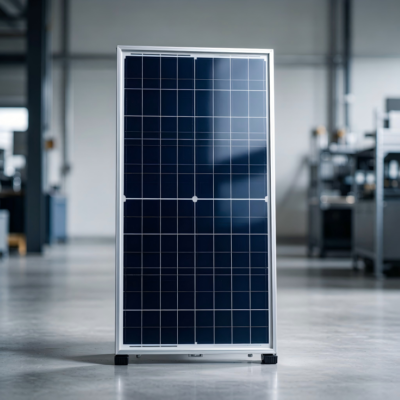
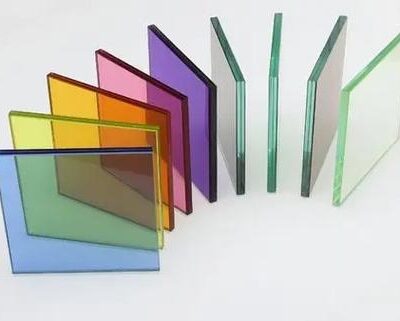

Product Parameter Table
I. Generation 1 / 2 High-Efficiency Monocrystalline PV Modules
1. Generation 1 Monocrystalline PV Module (BSF Aluminum Back Surface Field Technology · Basic Tempered Glass)
Corresponding to the mainstream technology of the PV industry’s early popularization period, this module is built around traditional aluminum BSF P-type monocrystalline cells paired with standard ultra-clear calendered glass. It was the leading high-efficiency product for ground-mounted power stations and residential projects from 2010–2015.
| Parameter Category | 72-Cell Utility Version | 60-Cell Residential Version |
| Module Power Range | 300W ~ 330W | 250W ~ 280W |
| Module Conversion Efficiency | 18.0% ~ 19.5% | 17.5% ~ 19.0% |
| Open-Circuit Voltage (Voc) | 43.5 ~ 44.5V | 36.2 ~ 37.2V |
| Working Voltage (Vmp) | 35.8 ~ 36.8V | 29.8 ~ 30.8V |
| Short-Circuit Current (Isc) | 9.2 ~ 9.8A | 8.5 ~ 9.1A |
| Working Current (Imp) | 8.4 ~ 9.0A | 7.8 ~ 8.4A |
| Module Dimensions | 1650 × 992 × 35mm (mono-glass, 3.2mm glass) | 1482 × 992 × 35mm (mono-glass, 3.2mm glass) |
| Module Weight | approx. 24.5kg | approx. 19.5kg |
| Glass Configuration | 3.2mm standard ultra-clear calendered tempered glass, no single-layer basic AR coating, transmittance ≈90% | 3.2mm standard ultra-clear calendered tempered glass, transmittance ≈90% |
| Encapsulation Structure | Glass + EVA + Cell + TPT Backsheet (mainly mono-glass) | Glass + EVA + Cell + TPT Backsheet |
| Temperature Coefficient | -0.42%/°C | -0.42%/°C |
| Operating Temperature Range | -40°C ~ 85°C | -40°C ~ 85°C |
| PID Resistance | No special optimization; noticeable degradation in high-temp/high-humidity environments | No special optimization |
| Lifetime Degradation | First-year degradation ≈2.5%, 25-year total degradation <25% | First-year degradation ≈2.5%, 25-year total degradation <25% |
| Core Features | Mature process, low cost, no special functional coating, average weatherability | Lightweight entry-level model, suited for early residential and small distributed systems |
2. Generation 2 Monocrystalline PV Module (PERC Passivation Technology · Basic AR Dual-Glass)
Corresponding to the mass-production period of PERC technology, rear-side passivation improved efficiency, single-layer AR anti-reflective glass became widespread for the first time, and dual-glass encapsulation began commercial use — the mainstream high-efficiency solution in the global PV market from 2016–2021.
| Parameter Category | 72-Cell Half-Cut Dual-Glass Version | 60-Cell Distributed Version |
| Module Power Range | 380W ~ 420W (front power) | 300W ~ 350W |
| Module Conversion Efficiency | 20.5% ~ 22.0% | 19.5% ~ 21.2% |
| Open-Circuit Voltage (Voc) | 49.2 ~ 50.2V | 40.8 ~ 41.8V |
| Working Voltage (Vmp) | 41.0 ~ 42.0V | 33.8 ~ 34.8V |
| Short-Circuit Current (Isc) | 10.5 ~ 11.2A | 9.8 ~ 10.5A |
| Working Current (Imp) | 9.3 ~ 10.0A | 8.9 ~ 9.6A |
| Module Dimensions | 2031 × 1008 × 6.5mm (dual-glass 2.5+2.5mm) | 1660 × 992 × 35mm (mono-glass 3.2mm) |
| Module Weight | approx. 27.5kg (dual-glass) | approx. 20.8kg |
| Glass Configuration | 2.5mm single-layer AR anti-reflective ultra-clear calendered glass, transmittance ≈92.5%, basic PID resistance | 3.2mm single-layer AR anti-reflective ultra-clear glass, transmittance ≈92% |
| Encapsulation Structure | Dual-glass laminated encapsulation (Glass + Encapsulant + Cell + Encapsulant + Glass) | Standard mono-glass encapsulation |
| Bifaciality | 70% ~ 75% | Mono-glass, no bifacial gain |
| Temperature Coefficient | -0.38%/°C | -0.39%/°C |
| Operating Temperature Range | -40°C ~ 85°C | -40°C ~ 85°C |
| PID Resistance | Basic PID optimization; <5% degradation after 1000h at 85°C/85%RH | Basic PID optimization |
| Lifetime Degradation | First-year <2%, 25-year total <20% | First-year <2%, 25-year total <20% |
| Core Features | Significant efficiency gain over Gen 1; dual-glass structure improves weatherability and rear-side power gain | Balanced cost-performance, suited for commercial/industrial rooftops and retrofit projects |
II. Generation 1 / 2 BIPV Building-Integrated PV Modules
1. Generation 1 BIPV Demonstration Module (Original Concept Version)
Corresponding to the exploratory / demonstration period of BIPV technology, centered on the concept of “retrofitting standard modules for building use.” No standardized building-material system had yet formed; mostly used in early landmark demonstration projects.
| Parameter Category | Crystalline Silicon Curtain Wall Version | Thin-Film Light-Transmitting Version |
| Power per Unit Area | 50W/m² ~ 90W/m² | 30W/m² ~ 60W/m² |
| Visible Light Transmittance | 10% ~ 30%, fixed, non-adjustable | 20% ~ 40%, darker color tone |
| Module Dimensions | Standard module dimensions, poor building adaptability, limited customization | Limited dimensions, mostly small-format tiling |
| Glass Configuration | Standard tempered glass, no dedicated building-safety design | Standard float tempered glass, poor optical uniformity |
| Fire Rating | No system fire certification; relies on module’s own flame retardance | No official fire rating |
| Sound Insulation | <25dB, no dedicated acoustic design | <25dB |
| Core Features | Strong concept-demonstration nature, high cost, low generation efficiency, annual degradation >3% | Some light transmission achieved, but severe light-induced degradation and poor stability |
| Applicable Scenarios | Early landmark demonstration curtain walls, experimental BIPV projects | Auxiliary facades with low daylighting requirements, shading elements |
2. Generation 2 Standardized BIPV Module (Building-Adapted Version)
Corresponding to the early commercialization stage of BIPV, transitioning from “add-on modules” to “building components,” and beginning to comply with curtain wall and roofing building codes — the mainstream solution for commercial BIPV projects from 2016–2020.
| Parameter Category | Standard Curtain Wall Version | Basic Skylight Version |
| Power per Unit Area | 80W/m² ~ 130W/m² | 70W/m² ~ 110W/m² |
| Visible Light Transmittance | 20% ~ 50%, adjustable in stages | 15% ~ 40%, adjustable in stages |
| Module Dimensions | Standard curtain wall size 1900×1200mm, limited customization | 1200×600mm standard module |
| Glass Configuration | 6mm tempered glass + power-generating layer + 6mm laminated glass, single-layer AR coating | 8mm tempered laminated glass + power-generating layer + 5mm tempered glass |
| Fire Rating | GB 8624 Class B1 (flame-retardant); some versions reach Class A | GB 8624 Class B1 |
| Sound Insulation | 28dB ~ 32dB | 30dB ~ 33dB |
| Water-tightness / Air-tightness | Meets GB/T 21086 Grade 3~4 | Meets GB/T 21086 Grade 4 |
| Core Features | Preliminarily meets building codes; installed with dedicated curtain-wall framework; lower cost than Gen 1 | Basic walkable-load capacity, equipped with simple waterproofing system |
| Applicable Scenarios | Commercial/industrial facility facades, auxiliary curtain walls for public buildings, factory skylights | Parking canopies, simple skylights, low-rise building facades |
III. High-Efficiency Monocrystalline PV Modules (Generation 3 Mass-Production Mainstay · N-Type TOPCon Dual-Glass Series)
Paired with third-generation AR anti-reflective + self-cleaning composite-coated PV glass, this is the mainstream choice for ground-mounted power stations and commercial/industrial distributed projects, available in high-power utility and distributed residential versions.
| Parameter Category | 72-Cell Utility Version (144 Half-Cut) | 54-Cell Distributed Version (108 Half-Cut) |
| Module Power Range | 620W ~ 650W | 430W ~ 450W |
| Photoelectric Conversion Efficiency | 22.8% ~ 23.9% | 22.5% ~ 23.5% |
| Open-Circuit Voltage (Voc) | 52.6 ~ 53.2V | 39.2 ~ 39.8V |
| Working Voltage (Vmp) | 44.2 ~ 44.8V | 32.8 ~ 33.4V |
| Short-Circuit Current (Isc) | 15.0 ~ 15.5A | 14.1 ~ 14.6A |
| Working Current (Imp) | 14.0 ~ 14.5A | 13.1 ~ 13.6A |
| Module Dimensions | 2278 × 1134 × 6.4mm (dual-glass 3.2+3.2mm) | 1722 × 1134 × 6.4mm (dual-glass 3.2+3.2mm) |
| Module Weight | approx. 32.5kg | approx. 23.2kg |
| Bifaciality | ≥80% | ≥80% |
| Temperature Coefficient | -0.29%/°C | -0.29%/°C |
| Operating Temperature Range | -40°C ~ 85°C | -40°C ~ 85°C |
| PID Resistance | <2% power degradation after 1000h at 85°C/85%RH | <2% power degradation after 1000h at 85°C/85%RH |
| Mechanical Load | Front 5400Pa / Rear 2400Pa | Front 5400Pa / Rear 2400Pa |
| Hail Resistance | No damage from 25mm hail at 23m/s impact | No damage from 25mm hail at 23m/s impact |
| Salt Spray Resistance | 2000h (IEC 60068-2-11 standard) | 2000h (IEC 60068-2-11 standard) |
| Core Features | AR anti-reflective + TiO₂ self-cleaning composite coating; suited for large ground-mounted stations and wind-solar mega-bases | Lightweight design, suited for color steel tile roofs and residential distributed systems |
IV. Perovskite–Silicon Tandem Modules (Generation 3 Technology Flagship)
Corresponding to the third-generation perovskite tandem technology roadmap, this module breaks through the efficiency ceiling of conventional monocrystalline cells. Paired with high-transmittance dual-glass encapsulation, it is suited for high-efficiency power stations, premium BIPV, and other scenarios.
| Parameter Category | Specification |
| Module Power Range | 700W ~ 750W (72-cell standard format, compatible with standard mounting systems) |
| Mass-Production Conversion Efficiency | 25.0% ~ 27.2% |
| Highest Laboratory Efficiency | Exceeds 34% |
| Temperature Coefficient | -0.22%/°C (low temperature sensitivity; significant generation gain in high-temperature environments) |
| Low-Light Generation Gain | Over 15% higher than conventional monocrystalline modules; excellent performance at dawn/dusk and on overcast/rainy days |
| Module Dimensions | 2278 × 1134 × 6.8mm |
| Module Weight | approx. 34kg |
| Encapsulation Structure | High-transmittance AR self-cleaning glass + perovskite top cell + silicon bottom cell + dual-glass encapsulation |
| Lifetime Degradation | First-year <2%, 25-year total <20% |
| Form Factor Support | Can be manufactured in semi-transparent, flexible, and custom-colored versions |
V. BIPV Building PV Module Series
Divided into the Generation 3 standard building version and the Generation 4 premium microcrystalline version, comprehensively suited for curtain walls, skylights, residential roof tiles, and other building scenarios — meeting the combined needs of building safety, aesthetics, and power generation.
1. BIPV Curtain Wall Light-Transmitting Module (Generation 3 Standard Version)
| Parameter Category | Specification |
| Power per Unit Area | 80W/m² ~ 160W/m² |
| Visible Light Transmittance | 30% ~ 70%, customizable |
| Module Dimensions | Standard 1900×1200mm, supports custom building dimensions |
| Glass Configuration | 6mm ultra-clear tempered glass + power-generating layer + 6mm laminated safety glass |
| Fire Rating | GB 8624 Class A (non-combustible) |
| Sound Insulation | ≥35dB |
| Wind Pressure Resistance | Level 9 wind pressure (1000Pa), no deformation |
| Water-tightness / Air-tightness | Meets GB/T 21086 Grade 5 |
| Optional Finishes | Transparent, frosted, colored, faux stone texture, etc. |
| Applicable Scenarios | Office tower curtain walls, commercial building facades, high-speed rail station exteriors |
2. BIPV Enhanced Skylight Module
| Parameter Category | Specification |
| Power per Unit Area | 120W/m² ~ 200W/m² |
| Visible Light Transmittance | 10% ~ 40%, customizable |
| Surface Load | ≥5kN/m² (meets walkable-roof requirements) |
| Glass Configuration | 8mm ultra-clear tempered laminated glass + power-generating layer + 6mm tempered glass |
| Anti-Slip Treatment | Supports anti-slip glaze surface treatment |
| Waterproof Rating | IP67, with dedicated waterproof mounting system |
| Fire Rating | Class A |
| Applicable Scenarios | Mall skylights, venue canopies, parking-lot entrance canopies |
3. Generation 4 Premium Microcrystalline BIPV Module (Flagship Version)
Uses fourth-generation microcrystalline glass substrate and a multilayer nano anti-reflective coating, balancing higher optical performance with building-safety ratings; suited for zero-carbon buildings and landmark projects.
| Parameter Category | Specification |
| Power per Unit Area | 150W/m² ~ 220W/m² |
| Visible Light Transmittance | 30% ~ 75%, adjustable; optical uniformity improved by 20% |
| Glass Substrate | High-transmittance microcrystalline glass, surface flatness <0.1mm |
| Mechanical Strength | 30% higher than standard tempered glass; excellent impact resistance |
| Weather Resistance | 5000h salt-spray resistance, wide operating range -30°C~85°C |
| Fire Rating | IEC Class A + GB 8624 Class A |
| Core Features | Spectrum-tunable, self-cleaning, low-glare; suited for premium zero-carbon buildings and landmark curtain walls |
VI. PV Inverter Series
1. String Inverter (Generation 3 Mass-Production Mainstay · for High-Efficiency Monocrystalline / Tandem Modules)
Suited for commercial/industrial rooftops and small-to-medium ground-mounted stations; supports the high-power, high-current characteristics of N-type TOPCon and perovskite tandem modules.
| Parameter Category | 110kW Utility Version | 30kW Commercial Distributed Version |
| Rated AC Output Power | 110kW | 30kW |
| Max DC Input Voltage | 1500V | 1100V |
| MPPT Count / Input Strings | 12 / 24 strings | 6 / 12 strings |
| Rated Output Voltage | 400V three-phase | 400V three-phase |
| Max Conversion Efficiency | 99.0% | 98.7% |
| European Weighted Efficiency | 98.4% | 98.1% |
| Protection Rating | IP66 | IP66 |
| Operating Temperature Range | -30°C ~ 60°C | -30°C ~ 60°C |
| Smart Features | Module-level monitoring, IV scanning, PID recovery, arc-fault protection | Module-level monitoring, PID recovery, active anti-islanding |
| Applicable Scenarios | Large ground-mounted stations, wind-solar mega-bases | Commercial/industrial color steel tile roofs, residential centralized grid connection |
2. Central Inverter (for GW-Scale Wind-Solar Mega-Bases)
Suited for ultra-large ground-mounted stations; 1500V system architecture reduces line loss and system cost.
| Parameter Category | Specification |
| Rated AC Output Power | 3.125MW |
| Max DC Input Voltage | 1500V |
| DC Input Range | 560V ~ 1500V |
| Max Conversion Efficiency | 99.1% |
| Rated Output Voltage | 690V three-phase |
| Protection Rating | IP54 (indoor / cabinet) |
| Operating Temperature Range | -30°C ~ 55°C |
| Core Features | Modular design, supports SVG reactive power compensation, compatible with bifacial module generation characteristics |
| Applicable Scenarios | Multi-gigawatt wind-solar mega-bases, desert power stations, floating PV stations |
3. Micro-Inverter (Dedicated for BIPV)
Module-level grid-connection control, suited for BIPV curtain walls, skylights, PV tiles, and other irregular building scenarios; offers dual advantages of safety and generation output.
| Parameter Category | Standard Version (for Gen 3 BIPV) | Premium Version (for Gen 4 Microcrystalline BIPV) |
| Rated Power per Unit | 600W | 800W |
| Modules Supported | 2 | 2 |
| Max Conversion Efficiency | 96.5% | 97.2% |
| Output Voltage | 220V single-phase | 220V single-phase |
| Protection Rating | IP67 | IP68 |
| Operating Temperature Range | -40°C ~ 65°C | -40°C ~ 85°C |
| Core Features | Module-level monitoring, low-light startup, no DC high voltage | Module-level shutdown, arc detection, supports curtain-wall dimming linkage |
VII. PV Mounting System
1. Fixed-Tilt Adjustable Mounting (Ground-Mounted Stations / Commercial Rooftops)
| Parameter Category | Ground-Mounted Version | Color Steel Tile Roof Version |
| Material | Q235B hot-dip galvanized carbon steel | Aluminum alloy 6063-T5 + stainless steel fasteners |
| Installation Tilt Angle | 25°~40°, seasonally adjustable | Parallel to roof / 5°~15° adjustable |
| Design Wind Speed | 42m/s (Level 12) | 35m/s |
| Snow Load | 0.5kN/m² | 0.3kN/m² |
| Corrosion-Resistant Lifespan | 25+ years | 25+ years |
| Compatible Modules | 72-cell / 60-cell standard dual-glass modules | 54-cell distributed modules |
2. Single-Axis Tracker (Efficiency-Boosting Version for High-Efficiency Stations)
| Parameter Category | Specification |
| Tracking Method | Horizontal single-axis coordinated tracking; astronomical algorithm + real-time correction |
| Tracking Angle Range | ±45° |
| Generation Gain | 15%~25% higher than fixed mounting |
| Drive Method | Motor-coordinated drive, supports multi-point support |
| Protection Rating | IP65 |
| Design Lifespan | 25 years |
| Applicable Scenarios | Low-to-mid-latitude ground-mounted stations, Gobi desert power stations |
3. BIPV Building-Dedicated Mounting System
| Parameter Category | Curtain Wall Version | Skylight / Roof Version |
| Material | Aluminum alloy 6061-T6 + 304 stainless steel | Galvanized carbon steel + aluminum profile |
| Structure Type | Hidden-frame / exposed-frame unitized curtain wall structure | Integrated waterproof channel structure |
| Design Load | Wind load 1.0kN/m², snow load 0.5kN/m² | Walkable roof ≥2.0kN/m² |
| Waterproof Rating | Grade 1 waterproofing (with weather-resistant sealant) | Grade 1 waterproofing (perforation-free interlocking structure) |
| Building Compliance | Meets GB 50210 curtain wall code | Meets GB 50345 roof waterproofing code |
| Design Lifespan | 30+ years | 30+ years |
VIII. DC Combiner Boxes and Grid-Connected Distribution Equipment
1. Smart DC Combiner Box (for Power Stations)
| Parameter Category | Specification |
| Input Circuits | 16 / 24 |
| Rated DC Voltage | 1500V |
| Rated Current | 32A per circuit |
| Protection Rating | IP65 |
| Smart Features | Current/voltage monitoring, lightning-protection failure alarm, temperature monitoring, remote communication |
| Included Protection | DC fuses, surge arresters, anti-reverse diodes |
2. AC Grid-Connection Switchgear
| Parameter Category | Distributed Version | Utility Version |
| Rated Voltage | 400V low-voltage | 10kV/35kV medium-voltage |
| Rated Current | 630A ~ 2500A | 630A ~ 3150A |
| Protection Functions | Overcurrent, overvoltage, undervoltage, leakage, lightning protection | Overcurrent, instantaneous trip, zero-sequence, metering, anti-islanding |
| Protection Rating | IP30 (indoor) / IP54 (outdoor) | IP30 (indoor cabinet) |
| Applicable Scenarios | Commercial/industrial, residential grid connection | Large ground-mounted station step-up substations |
No comment